EV Charging Cost Calculator
Calculate how much it costs to charge your electric vehicle based on your electricity rates, vehicle efficiency, and driving habits.
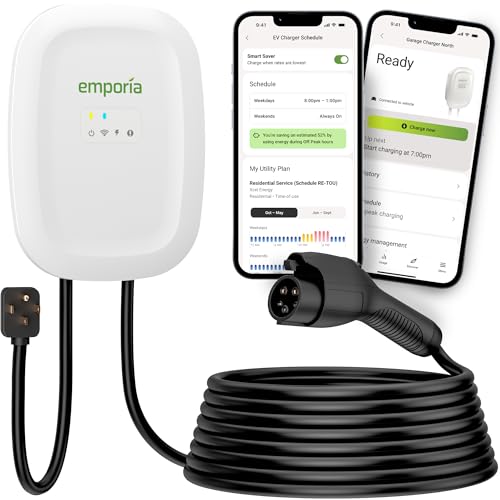
List of the Best EV Chargers:




Understanding EV Charging Costs
Electric vehicle charging costs represent one of the most significant financial considerations for EV owners. Unlike gasoline vehicles where fuel costs are relatively straightforward, EV charging expenses vary dramatically based on multiple factors including electricity rates, charging location, vehicle efficiency, and charging habits. This comprehensive guide will help you understand how to calculate and optimize your EV charging costs.
The Fundamental Formula: kWh × Rate = Cost
At its core, calculating EV charging costs follows a simple formula: Energy Consumed (kWh) × Electricity Rate ($/kWh) = Total Cost. However, determining the actual energy consumed requires understanding your vehicle's battery capacity, charging efficiency, and driving patterns. Most modern EVs have battery capacities ranging from 40 kWh for compact models to 150+ kWh for luxury and truck models.
Electricity Rates: The Primary Cost Variable
Electricity rates in the United States vary from $0.08/kWh in states with abundant hydroelectric power to over $0.40/kWh in areas with high generation and distribution costs. The national average sits between $0.15-0.25/kWh. Many utilities offer special EV charging rates or time-of-use plans that provide significantly lower rates during off-peak hours (typically nights and weekends). These plans can reduce charging costs by 30-50% compared to standard residential rates.
Charging Efficiency: Not All Energy Reaches the Battery
Charging efficiency refers to the percentage of electricity drawn from the grid that actually makes it into your vehicle's battery. Level 1 charging (standard 120V outlet) typically has 85-90% efficiency due to longer charging times and higher conversion losses. Level 2 charging (240V) improves to 90-95% efficiency. DC fast charging maintains 92-97% efficiency but may include additional station fees. These efficiency losses translate to real costs - for every $10 spent on charging, $0.50-$1.50 might be lost to conversion inefficiencies.
Vehicle Efficiency: Miles per kWh Matters
EV efficiency, measured in miles per kilowatt-hour (mi/kWh), dramatically impacts charging costs. Efficient vehicles like the Tesla Model 3 RWD achieve 4.0-4.5 mi/kWh, while larger SUVs and trucks might achieve only 2.0-2.5 mi/kWh. This means the same electricity cost can deliver twice the driving range in an efficient vehicle compared to a less efficient one. Efficiency varies with driving conditions - highway driving typically reduces efficiency by 15-25% compared to city driving due to aerodynamic drag.
Charging Location Cost Comparison
| Charging Type | Typical Cost | Efficiency | Best Use Case |
|---|---|---|---|
| Home Level 1 (120V) | $0.12-0.25/kWh | 85-90% | Overnight charging for low daily mileage |
| Home Level 2 (240V) | $0.12-0.25/kWh | 90-95% | Primary home charging for most EV owners |
| Public Level 2 | $0.20-0.40/kWh + session fees | 90-95% | Destination charging while shopping/dining |
| DC Fast Charging | $0.30-0.60/kWh + time fees | 92-97% | Road trips and urgent charging needs |
| Workplace Charging | Often free or subsidized | 90-95% | Daily charging during work hours |
Battery Health and Charging Strategies
Modern EV batteries last longest when kept between 20-80% state of charge. Charging to 100% regularly or letting the battery drop below 10% frequently can accelerate degradation. Most manufacturers recommend setting your daily charge limit to 80-90% and only charging to 100% for long trips. This practice not only preserves battery health but also reduces charging costs since the final 10-20% of charging typically occurs at reduced speed and efficiency.
Time-of-Use Rates and Smart Charging
Many utilities offer time-of-use (TOU) rates with significantly lower pricing during off-peak hours (usually 9 PM to 6 AM). Smart charging systems can automatically schedule charging during these low-rate periods. Some advanced systems even integrate with renewable energy production - if you have solar panels, you can program your EV to charge primarily when solar production is highest, effectively charging your car with nearly free electricity.
Comparing EV Charging Costs to Gasoline
To make a fair comparison between EV charging costs and gasoline expenses, consider both the cost per mile and total cost of ownership. At $0.15/kWh electricity and 3.5 mi/kWh efficiency, an EV costs about $0.043 per mile. A gasoline vehicle getting 30 MPG at $3.50/gallon costs $0.117 per mile - nearly three times more. Over 15,000 miles annually, this represents a savings of $1,100-$1,500 per year on fuel alone.
Public Charging Networks: Subscription Models vs Pay-As-You-Go
Major charging networks like Electrify America, EVgo, and ChargePoint offer subscription plans that provide reduced charging rates. These typically cost $4-10 per month but offer 10-25% lower charging rates. The break-even point is usually around 100-150 kWh of charging per month. For frequent public charging users, subscriptions can save hundreds of dollars annually. However, occasional users may find pay-as-you-go more economical despite higher per-kWh rates.
Impact of Climate on Charging Costs
Extreme temperatures significantly affect EV charging costs and efficiency. In cold weather (below 20°F), battery efficiency can drop by 20-40%, requiring more frequent charging and preconditioning energy use. The battery management system may also draw additional power to maintain optimal temperature. Similarly, extreme heat can reduce efficiency and increase cooling system energy consumption. These factors can increase annual charging costs by 15-25% in regions with severe winters or summers.
Government Incentives and Utility Rebates
The federal government offers tax credits covering 30% of EV charger installation costs (up to $1,000) for home installations. Many states and utilities provide additional rebates, often covering 50-100% of charger equipment and installation costs. Some utilities offer special EV charging rates as low as $0.05/kWh during off-peak hours. These incentives can reduce the effective cost of EV ownership by thousands of dollars over the vehicle's lifetime.
Calculating Total Cost of Ownership
When evaluating EV charging costs, consider the total cost of ownership including:
- Electricity costs (home and public charging)
- Charger installation and equipment costs
- Maintenance savings compared to gasoline vehicles
- Potential resale value impact based on battery health
- Insurance costs (sometimes higher for EVs)
- Registration fees (some states charge additional fees for EVs)
Future Trends in EV Charging Costs
Several trends will impact future EV charging costs: Increasing renewable energy penetration is expected to stabilize or reduce electricity rates in many regions. Vehicle-to-grid (V2G) technology may allow EV owners to sell electricity back to the grid during peak demand, potentially generating revenue. Standardization of charging connectors and payment systems should reduce public charging costs through increased competition. Battery technology improvements will continue to increase efficiency, reducing energy consumption per mile.
Frequently Asked Questions
How much does it cost to charge an EV at home?
For a typical EV with a 75 kWh battery charging from 20-80% at the national average electricity rate of $0.15/kWh, a full charge costs about $9.00. This provides approximately 210 miles of range for a vehicle achieving 3.5 mi/kWh efficiency.
Is it cheaper to charge at home or at public stations?
Home charging is almost always cheaper than public charging, typically 50-70% less expensive per kWh. However, some workplace charging is free, and public charging may be necessary for longer trips or for those without home charging access.
How do I find the best electricity rate for EV charging?
Contact your utility to inquire about time-of-use rates or special EV charging programs. Compare the rates, peak/off-peak times, and any monthly fees. Consider your typical charging patterns - if you can charge mostly at night, TOU rates often provide significant savings.
Does fast charging cost more than regular charging?
Yes, DC fast charging typically costs 2-3 times more per kWh than home charging due to equipment costs, demand charges, and network fees. Some networks also charge by the minute in certain states, which can further increase costs.
How can I reduce my EV charging costs?
Several strategies can reduce costs: Charge during off-peak hours if your utility offers time-of-use rates, maintain optimal tire pressure to improve efficiency, use preconditioning while still plugged in to reduce battery heating/cooling energy use while driving, and consider installing solar panels to generate your own charging electricity.
Do all public charging stations charge the same rates?
No, rates vary significantly between networks, locations, and even individual stations within the same network. Urban stations often charge more than rural ones. Some networks have membership plans that offer lower rates to subscribers.
How does weather affect charging costs?
Cold weather can increase charging costs by 20-40% due to reduced battery efficiency and increased cabin heating needs. Preconditioning the battery while plugged in before driving can mitigate some of these costs by using grid power instead of battery power for initial heating.
Are there any hidden costs in EV charging?
Potential additional costs include: Demand charges on your home electricity bill if you add significant load, charger installation costs ($500-$2,000), network subscription fees, idle fees at public stations if you don't move your car after charging completes, and potential electrical panel upgrades if your home's electrical system needs reinforcement.
How do I calculate the cost of a road trip with an EV?
Estimate total miles, divide by your vehicle's highway efficiency (typically 10-20% lower than city efficiency), multiply by expected charging costs at fast chargers (usually $0.30-0.60/kWh), and add any network subscription fees if applicable. Many navigation systems in EVs now calculate this automatically.
Is EV charging getting cheaper over time?
Home charging costs follow electricity rates, which have been relatively stable or increasing slightly. Public charging costs have decreased in real terms as networks expand and competition increases, but rates still vary widely. The overall trend is toward more predictable, transparent pricing as the market matures.